Category Archives: Earth Care

2024 Witness Fund Donations

Each year the budget for Ithaca Monthly Meeting (IMM) allocates sums of money to be used by the Peace & Social Justice and Earthcare committees to contribute to causes, projects, or organizations that align with the committee’s charge and Quaker testimonies. The Friends on these committees carefully consider where to donate their witness funds. 

Perhaps you would like to take advantage of the discernment done by these committees and also contribute to these projects and organizations! This page lists where these donations went in 2024.

Local

Catholic Charities: Interfaith Assistance Fund
324 W Buffalo St
Ithaca, NY 14850

Ithaca Catholic Worker: Peter DeMott Peace Trot
411 Plain St.
Ithaca, NY 14850
The Peace Trot occurs on Fathers’ Day each year, with fundraising happening in the weeks leading up to it.

Cayuga Lake Watershed 
PO Box 348
Aurora, NY 13026

Farm Sanctuary
P.O. BOX 150
Watkins Glen, NY 14891

First Congregational Church of Ithaca: Sanctuary Ministries
309 Highland Road
Ithaca, NY 14850

Friends Center for Racial Justice 
227 Willard Way
Ithaca, NY 14850

Friendship Donation Center
1013 West Martin Luther King Jr. / State Street
Ithaca, NY 14850

Greater Ithaca Activities Center (GIAC): Robin Fund
301 W Court St.
Ithaca, NY 14850

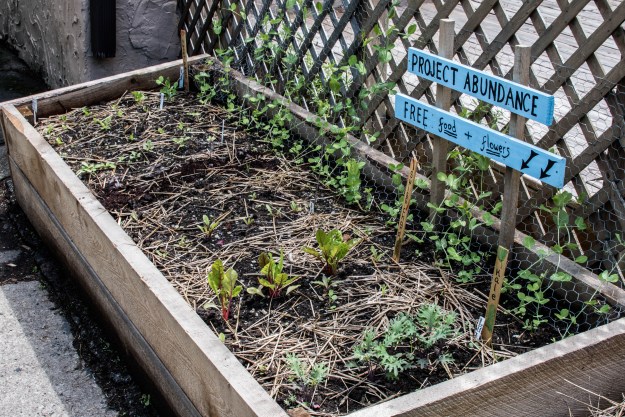
Ithaca Monthly Meeting: Project Abundance
To donate online, click Donate in the menu at the top of this page, then select the button for “Donate to the Ithaca Monthly Meeting General Fund”. Add “Project Abundance” to the section to write a note.
Read more about Project Abundance here.

Open Doors English
Ithaca, NY 14850

Village At Ithaca
401 West Seneca St.
Ithaca, NY 14850

National Connections

American Friends Service Committee 
1501 Cherry St.
Philadelphia, PA 19102

AFSC U.S.-Mexico Border Program 
3850 Westgate Place 
San Diego, CA 92105 

Earthjustice
Earthjustice Gift Processing Center
P.O. Box 96346
Washington, DC 20077-7953

Indigenous Environmental Network
PO Box 485
Bemidji, MN 56619

Nonviolent Peaceforce
U.S. Main Office
2143 Lowry Ave N, Suite A
Minneapolis, MN 55411

Our Children’s Trust
P.O. Box 5181
Eugene, OR 97405

Quaker House
223 Hillside Ave
Fayetteville, NC 28301

International

Bolivian Quaker Education Fund
PO Box 6847
Ithaca, NY 14851

Friends International Bilingual Center (FIBC): Food Security Project
For sending a check, contact centrobilingueamigos7bo@gmail.com

Friends International Bilingual Center (FIBC): Right Sharing of World Resource
For sending a check, contact centrobilingueamigos7bo@gmail.com

Public Citizen
1600 20th Street NW
Washington DC 20009

United Palestinian Appeal 
2461 Eisenhower Ave 
2nd Floor, #035 
Alexandria, VA 22314

Via La Campesina

Dispatch from Earth: Finding the Spirit in Mindful Eating

by Betsy Keokosky

IMM Earthcare spent the first half of last year reading and discerning on the food sections of “Regeneration: Ending the climate crisis in one generation” by Paul Hawken. It informed us that 35% of the world’s carbon emissions come from food production and processing and that “today’s food system has become the single greatest cause of global warming, soil loss, chemical poisoning, chronic disease, rainforest destruction and dying oceans.” 

There are multiple ways of understanding these words, “mindful eating.” It encompasses a wide range of things, such as paying attention to the sensory experiences of taste, touch, and smell that are the pleasures of eating; paying attention to food as the nutrition that builds our bodies and health; paying attention to where and how our food is coming from. 

Quakers, I think, also tend to connect mindful eating with our outsized human effect on this planet. Mindful Eating was the theme of New York Yearly Meeting’s January 2023 issue of their Spark newsletter* and the editors defined mindful eating as “Nourishing All Life While Nourishing Ourselves.” 

To me when we look for the spirit in mindful eating, we are looking for connections like Thich Nhat Hahn’s conception of “interbeing,” or Donella Meadow’s “system thinking,” or Robin Kimmerer’s description of “indigenous wisdom.” Mindful eating is not just a set of rules to eat less meat or avoid processed food. For better or for worse, we are all crowded, more closely connected on this planet, and we can no longer act without consequences. We share them.

Mindful eating is, for me, the understanding that we are part of the slow unfolding that is the miracle of growth and decay. We are not outside looking in, but participate in this planetary ecosystem, in a deeply organic way. I call this “spirit” or “sacred” because what can be more sacred than the intricate interrelationships –which we cannot begin to understand– of life, time, and space on this planet. If we think of how billions and trillions of beings co-exist with us, big and small, short-lived and long-lived, each experiencing time and space from the vantage point of their own scale and life span, what does that do to our own human-centered sense of reality? We are all living side by side with vastly different experiential perceptions of what the world is like, each encapsulated in our own bubble of sensory filters. Yet we are interdependent and overlapping in ways that are incredibly complex. How do we even comprehend this? 

The food chain is part of this amazing logic that inexorably connects us all. We humans have brought ourselves to the top of the food chain, but we have yet to understand how truly interdependent we are on others that need a place at the table. Let us open our eyes to the spirit and find a love and gratitude that nourishes all life, even as we are nourishing ourselves.

*An expanded booklet version of the Spark issue on Mindful Eating includes articles by several IMM people: Betsy Keokosky, Margaret McCasland, Cai Quirk and Joshua Quirk. It is available at www.nyym.org/sites/default/files/Mindful-Eating-booklet.pdf.

All About Heat Pumps – a Presentation by Earthcare

Ithaca Monthly Meeting’s Earthcare Committee invites you to a presentation on Heat Pumps, on Thursday, February 8 at 7:00pm via Zoom. The speakers will be Anne Rhodes and Leigh Miller from Cornell Cooperative Extension

During our October listening session on Earthcare, some people shared that they love their heat pumps. Others asked questions and expressed concerns about them. Are they appropriate for everyone? What are the advantages? What are the problems? Now we can offer you some answers!

New York is on the cutting edge of using energy-efficient heat pumps to change the ways that we heat and cool our buildings and that we heat our water. In NYS, millions of dollars of incentives to install heat pumps are currently available.

This presentation will talk about the range of heat pump options, their pros and cons, and introduce ways to navigate the incentives. Let us know what YOUR questions are, and Anne and Leigh, both knowledgeable Community Energy Educators, will be ready to answer them.

Depending on your building and the surrounding land, a heat pump can be geothermal (using the ground or a body of water) or air-source. You can install a “stand-alone” hot water heater, or have it be part of your whole house heating system. If “right-sized” and properly installed in an energy-efficient building, heat pumps use small amounts of electricity. And yes, there are now “cold weather” heat pumps” that can even handle an Arctic blast!

As our planet warms, the ability to cool our buildings (one of heat pumps’ big advantages over traditional heating systems) will become ever more important. More importantly, intergenerational justice — our love for the people and other beings who will be living in the world of the future — calls us to limit future warming as much as possible (AMAP) by reducing our use of fossil fuels as soon as possible (ASAP). Installing heat pumps in buildings we own and/or help make decisions about is a key way we can substantially reduce our use of fossil fuels AMAP ASAP.

Report from the March to End Fossil Fuels

by Betsy Keokosky

On Sunday September 17, I was lucky enough to find myself on a chartered bus driving to New York City through very early morning sunlight with people from Extinction Rebellion (the bus organizers) sitting in front of me, and students from Cornell climate action groups in the rows behind me. The March to End Fossil Fuels was one of the most diverse marches I have ever been on. As their website said, it was “a broad-based collaboration among New York grassroots organizations; Black, People of Color, Indigenous and frontline communities living next to oil and gas facilities and infrastructure; youth, elders, workers, people of faith, and people of all backgrounds impacted by fossil fuels and climate disasters across the U.S.” Climate Change is affecting us all now.

Besides the diversity, I was also struck by how this march was connecting environmental protest to spirituality, across all faiths, in a way that I hadn’t seen much before. Many people were there to ask President Biden to declare a climate emergency and stop incentivizing fossil fuels, but I felt we were also there because we were reshaping our religious and ethical beliefs to recognize and engage with the sacredness of life on this planet we share.

I stumbled across a wonderful religious rally before the march started that I later learned was a multi-faith Invocation of Spirit:

Invocation of Spirit

People of many diverse faiths and spiritual communities will gather for an Invocation —inviting the spirit of the divine within our traditions, as well as the spirits of our ancestors, of future generations, of nature, plants, animals, elements, and all the places of the earth affected by what happens in NYC (the UN, Wall Street, etc) to march with us and help us to have the love, strength and courage we need to create a just and thriving world. People of all ages and cultural traditions are invited!

GreenFaith
A speaker at the rally

I listened to these religious leaders as, one by one, they took the podium and spoke to the surrounding crowd. It was a moving experience to stare up to the blue sky between NY City skyscrapers and hear people of all faiths acknowledge our dependence on Earth.

This event was organized through two interesting organizations: GreenFaith, a coalition of faith-based grassroots climate justice movements; and The Center for Earth Ethics located in Union Theological Seminary.

The Center defines Earth Ethics as “The discernment of how to live in relationship with the living planet. … [it] reminds us that we are connected to the Earth and that our moral obligations extend across space, time and even species.”

They further elaborate that Earth Ethics:

  • acknowledges that those who are least responsible for pollution and depletion of the natural world are the most harmed by them,
  • extends moral concern to future generations,
  • extends moral concern to nonhuman life, and
  • recognizes the planet as a living whole.

They also noted that “We amplify and engage with Indigenous wisdom to reorient society back toward nature and shape a more eco-centric world.”  (source: https://centerforearthethics.org/what-are-earth-ethics-tk/)

Three Quaker Earthcare Witness Events During May

by Margaret McCasland

Quaker Earthcare Witness (QEW) is a North American organization that is coordinated by people from all over North America. They have a very small staff (currently 2 people), and much of their work is done by volunteers on their very large (up to 50 people) Steering Committee. I became a member of the QEW Steering Committee last year when New York Yearly Meeting named me as a representative to QEW.

The Steering Committee meets twice a year for 4 days, and we had our most recent gathering the last weekend in April. While I have attended portions of Steering Committee gatherings for quite a few years, this was the first gathering where I attended nearly every session.

QEW asks all Steering Committee people to either be or to recruit a liaison to their Monthly Meeting. I will serve as liaison until I find someone else who is interested in keeping up with what a liaison does. With this newsletter article, I am fulfilling the major duty of MM liaisons: letting you know about events QEW is sponsoring this month. Each month I will also introduce one of the many resources they offer. This month I am going to highlight QEW’s monthly Worship Sharing.

NOTE: Full descriptions of these events (and other events) are available at the QEW website. The text in italics is quoted from the QEW website. The text in regular font is from Margaret.

No Faith in Fossil Fuels: A Climate Finance Summit

with GreenFaith and Quaker Earthcare Witness
May 8 @ 12:30 pm – May 12 @ 1:30 pm EDT

Hurricanes. Excessive Heat. Crop failure. The loss of biodiversity and human life around the world. All of it is horrible – and could have been avoided.

Climate destruction is being bankrolled by large corporations and their executives who choose to act against what is right and good, at the expense of our planet’s future. The climate crisis is a crisis of greed.

From May 8-11, people of faith will gather to learn about how banks and asset managers continue to invest in the fossil fuel industries that are destroying communities in the U.S. and around the world – and then find out how to hold these financial institutions accountable. Together, we can commit to taking the bold steps necessary to effect real change.

This year’s three day summit will amplify the voices of frontline leaders of Turtle Island (what we now call North America) and the Global South, whose communities bear the direct brunt of financial decisions made by Chase Bank, Bank of America, Vanguard, Black Rock, and others who invest in harmful oil and gas extraction.

This summit is for you if you’re just making the connections between faith, finance, and climate, if you’re a money manager rooted in just climate values, or if you are part of a community wrestling with these questions.

We will build on the momentum sparked with the 2022 launch of GreenFaith’s Climate Finance Campaign. This year we have a lot to celebrate, and the work continues! We hope you will join us and a growing number of partner organizations as together we:

  • Root in our faiths for resilience, inspiration, and joy for the journey ahead
  • Learn more about Indigenous-led campaigns in the U.S. and East Africa
  • Find out how to move your money
  • Take action in our closing Action Hour

Click here for more information and/or to register.


A Holistic Approach to Earthcare Along the Blue Ridge

May 8 @ 7:00 pm – 8:00 pm EDT

In the Blue Ridge Mountains of West Virginia, Friends Wilderness Center and the China Folk House Retreat are aspiring toward bridging divides in humanity, building community with nature, and lifting all toward the Light and a brighter future. Join Kimberly Benson and John Flower for a conversation on redefining conservation to include cross-cultural connections and building compassion and respect for all life, and how they’re making this happen on the ground. They write, “Humans have a tremendous ability to rationalize and justify exploiting what we ‘other.’ We need to remove the illusion of separation among people and between people and nature.”

Click here to register.

About the presenters:

  • Kimberly Benson is a scientist, naturalist, climate and environmental activist, member of Annapolis Friends Meeting, and the general manager of Friends Wilderness Center. Learn more by reading Kimberly’s BeFriending Creation article.*
  • John Flower is Director of the Sidwell Friends School Chinese Studies Program. Since 2017, he has worked on rebuilding the “China Folk House Retreat,” to serve as a site for experiential learning, environmental sustainability and people-to-people cultural exchanges focusing on traditional agriculture, folkways and craft. 

*”BeFriending Creation” is QEW’s quarterly newsletter, available in print or digital form. To subscribe, read back issues, or learn how to submit material, click here.


Last but not least, Quaker Earthcare Witness hosts monthly online worship sharing groups: 

May Worship Sharing with Quaker Earthcare Witness

May 23 @ 7:00 pm – 8:00 pm EDT

In worship sharing, we gather in small groups to focus on a particular question (or questions) to explore our own experience and share with each other more deeply than we would in normal conversation. It seeks to draw us into sacred space, where we can take down our usual defenses, and encounter each other in “that which is eternal.” We welcome all to join us!

Together we are creating more opportunities for Friends who care deeply about the Earth and each other to be in spiritual community with one another. We hope you can join us.

I attended my first QEW monthly Worship Sharing this April and found it “spoke to my condition” and was very heartening because of the deep sharing. A new query is offered every month. Here is the info I was sent when I registered for the April Worship Sharing:

This event usually runs about an hour. For those who may be joining this worship sharing for the first time or would like a reminder, our usual structure is: 

  1. Welcome & Introduction
  2. Read Worship Sharing Guidelines, Reading & Queries
  3. Worship Sharing in Breakout Rooms of 5-6 people (45 minutes)
  4. Reflection, closing, announcements

As an example, this was the April query: We’ll be sitting with Mary Annaïse Heglar’s quote, “The thing about climate is that you can either be overwhelmed by the complexity of the problem or fall in love with the creativity of the solutions. If you feel inspired, you can read this article of hers beforehand.

[The link goes to an article that is behind a paywall. If there is interest, I will print out a few copies for our library.]